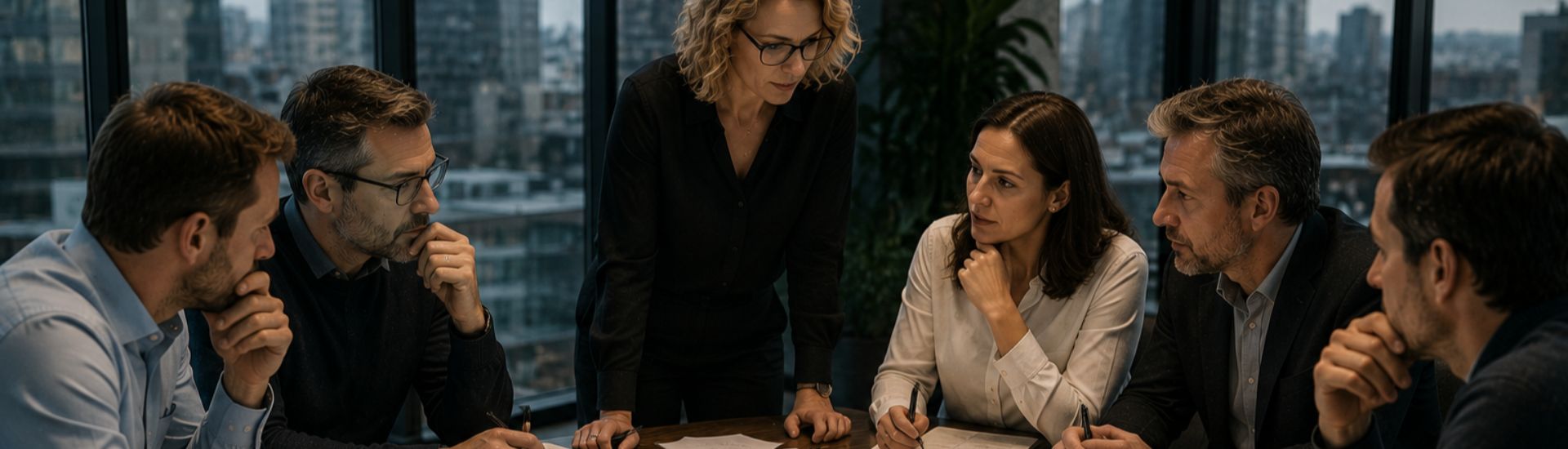
Most companies end the year in the same way: the leader presents the numbers, the team nods, and everyone leaves feeling that something important was discussed. In January, work continues much the same as it did in December.
This session works differently.
In one or two days, the management team honestly reviews the past year, without polishing the story or looking for someone to blame, and leaves with an agreed plan for the next year. A plan everyone has signed up to, not just the CEO.
When the year-end review is led only by the CEO, it becomes a monologue. The team listens and agrees, but everyone leaves with their own version of what happened and why. There is no shared understanding.
When planning for the next year happens top-down, people receive goals they did not help define. They formally accept them, and then execute only as far as they understand the purpose behind them.
The result: year after year, the company repeats the same mistakes because there was no real review. Every January starts with “this year we’ll definitely do it,” and by March that energy has already faded.
The year is over, but there has still been no honest conversation about what worked and what did not. It is unclear what to scale and what to stop doing.
Plans for the next year need to be set, but it is unclear what starting point to use because the real results have not been analysed.

Some of last year’s tasks were not completed, and no one really understands why. The same tasks are being carried into the next year.

The team is burned out by the end of the year, tension has built up between people, and it is hard to start a new year in that state.

Different managers have different priorities for the next year. Without a joint discussion, everyone will pull in their own direction.

You want the new year to start with clarity and energy, not with December’s inertia and a vague “let’s see how it goes.”

The team needs to sync up so everyone understands the past year, what has changed, and where the company is heading.

Last year’s strategic goals were only partly achieved, and you need to decide what to take into the next year and what to rethink.
How the session works
The session has two parts: reviewing the past and planning the future. This is an important principle: you cannot plan honestly without first understanding what happened. Otherwise, next year’s plans are built on the same ground that led to last year’s misses.
Part one: year-end review
Together, we look at the results: what was achieved, what was not, and why. We are not looking for someone to blame; we are looking for causes. We review which decisions worked, which did not, and capture the lessons worth taking forward.
This is the honest conversation that often does not happen inside a company: because it is uncomfortable to talk about failures in front of the leader, because there is no habit of doing it, or because no one wants to spend the time. An external consultant creates the conditions for that conversation to happen.
Part two: planning the next year
Based on a realistic understanding of the situation, neither overly optimistic nor overly pessimistic, the team agrees on priorities for the next year. Not just a wish list, but real choices: what we take on, what we postpone, and why.
We define a set of strategic focuses and experiments for the year. We agree how we will know whether we are moving in the right direction. We assign responsibility: who owns what.
The session ends not with a feeling of “that was a good conversation,” but with concrete agreements that everyone in the room has signed up to.
How the work will run
- Preparation stage
- Running the session
- Report
- Follow-up support (optional)
A year-end review is a sensitive format. It is hard for people to speak openly about failures in front of the leader. It is hard for the leader to hear honest feedback from the team. As a result, the conversation often slides into “overall, the year was fine, with some areas for improvement.”
An external consultant takes some of that pressure out of the room. They are not part of the hierarchy, and they have no personal interest in making anyone look good or bad. That makes it possible to ask uncomfortable questions and get honest answers.
Beyond that, the consultant has seen dozens of other companies deal with similar issues. They can bring not only process, but also an expert view: what typically blocks plan execution, which planning mistakes are common, and how other companies have moved through similar situations.
Most importantly, the consultant does not leave until the team has a concrete result. Not “we had a good conversation,” but “this is what we decided, and this is who owns it.”
Why the team actually follows through on what was agreed
When a decision is made by the team, rather than handed down from above, people relate to its implementation differently. They know why it matters because they helped justify it. They know exactly what was decided because they were part of the discussion. And they feel accountable because they signed up to it.
This is the key difference from top-down planning: there, people execute someone else’s decisions. Here, they execute their own.
An honest, shared view of the past year: what worked, what did not, and why. No competing versions and no “everyone kept their own opinion.”

Captured lessons from the year that actually change the approach in the next period, not just notes in the minutes.
Agreed strategic priorities for the next year, chosen together rather than passed down from the top.
A concrete action plan with owners and deadlines, signed off by the whole team.
A team that enters the new year with shared understanding and commitment, not December inertia.

A report with the session outcomes, all working materials, and the consultant’s recommendations.
Feedback on the management team: how people showed up, where there is potential, and where attention is needed.
Expert

Aliaksandr Pankou
Co-Founder of A.maze.S

Tell us about your situation. We will discuss the right format and help you prepare for the session.

You May Also Be Interested In
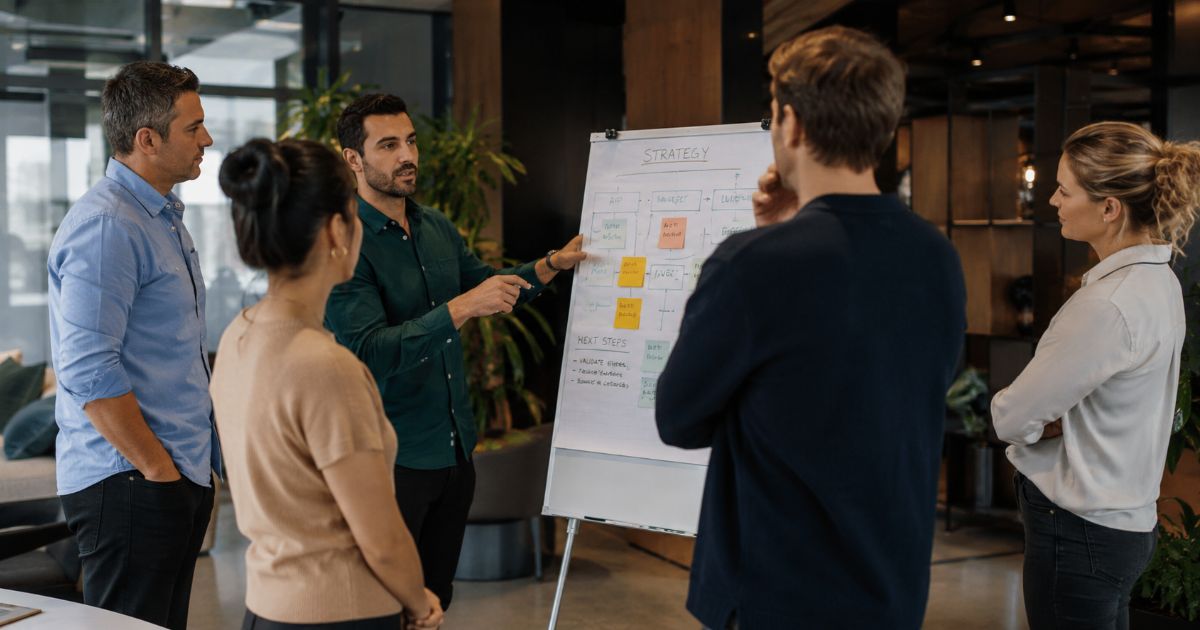
Case study: Strategic session for a high-growth HRTech startup
This engagement became more than a planning exercise — it was the client's first step toward mature strategic management.
Read more All cases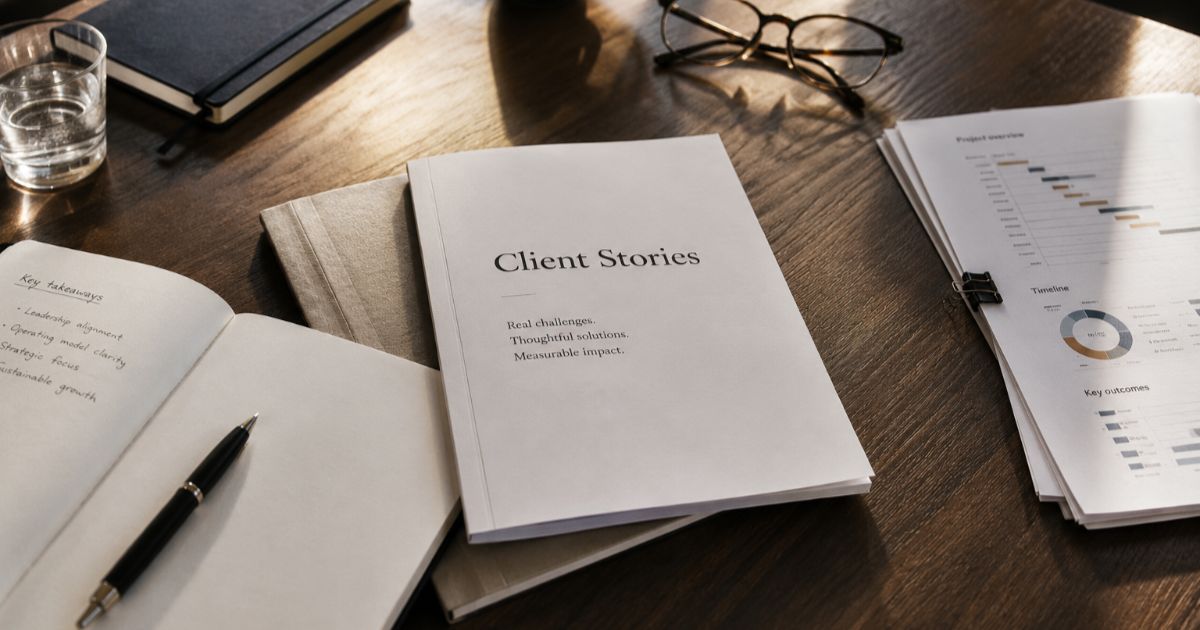
Review of the strategic session from Lyvin Properties, property developer
A.maze.S is the ideal choice for companies that want to move toward their goals with intention — not just through the efforts of the leadership, but through the whole company.
Read more All testimonials
How a strategic session helps a business build a multimillion-dollar future
By some estimates, only 15–20% of business owners actually think about long-term prospects and growth. How do you look ahead to your company's future and get to work on strategic plans?
Read more All articles