If everyone nods in the meeting, but a week later each person is doing something different, this is not a people problem. It is a sign that there is no shared information field. Everyone is working from their own picture of reality, and those pictures do not match.
To achieve the company’s strategic goals successfully, the management team needs a shared understanding of priorities, tasks, and approaches.
When leaders are looking in the same direction, it is easier for the company to overcome challenges and work toward business goals.
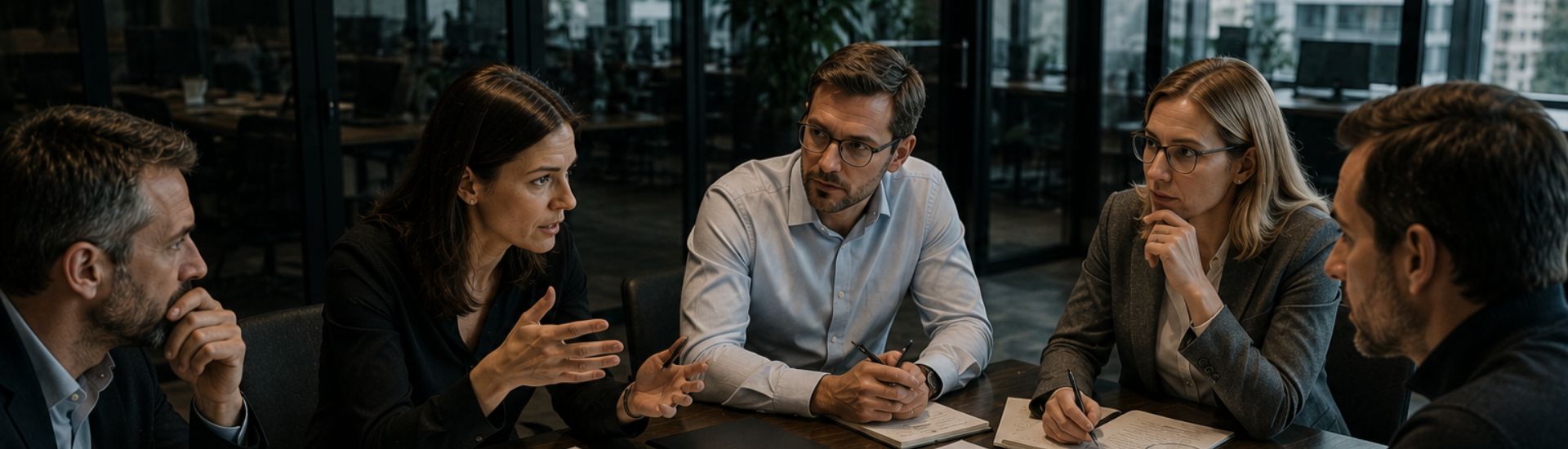
A strategic session to align the information field helps top managers synchronize their views on goals, tasks, and key approaches, creating a shared starting point for collaboration and more consistent decisions.

Leaders interpret the company’s strategic tasks differently and explain priorities to their teams in different ways.

The company is launching a new strategic project that requires clear coordination, but everyone has a different view of what you are building.

Leaders constantly argue about priorities or approaches, and key decisions cannot be aligned without conflict.

Everyone agreed in the meeting, but a week later each leader is doing things their own way.
How the work is structured
Before the session, there is a preparation stage. We interview key participants, not with broad “how are things?” questions, but specifically about where understanding differs and where misaligned decisions are being made. This stage is essential: without it, the session turns into an exchange of opinions.
During the session, we work with specific points of misalignment. Not “let’s stay positive,” but “this is where your teams understand the task differently, and this is what it costs the company.” Discussions are structured. Disagreements are turned into aligned decisions.
After the session, you receive a report with conclusions and documented agreements. Not “we discussed everything,” but “this is exactly what we agreed to understand in the same way, and this is how it should be communicated downward.”
Project stages
- Session design
- Running the session
- After the session
What the external consultant is responsible for
- Objectivity and independence. A consultant who is not involved in the company’s day-to-day processes provides an objective analysis and helps identify information gaps and misunderstandings that may remain invisible from the inside.
- Structuring and synchronizing information. The consultant brings experience and methods that help structure and synchronize key information, supporting the management team in aligning its view of company goals and priorities.
- Facilitation and removing barriers. Through facilitation skills, the consultant creates the conditions for constructive dialogue, helps leaders discuss and align controversial issues, and creates a shared information field for working on the strategy.

A management team with a shared view of strategic goals and approaches.

Information gaps are closed and team synergy is strengthened.

Fewer conflicts and fewer unresolved tasks between departments.

More aligned and effective decision-making.
Project Expert

Aliaksandr Pankou
Co-Founder of A.maze.S
What we do not do
- We do not replace a strategic session with team building.
- We do not give lectures about the importance of a shared vision.
- We do not replace systematic strategy work with a one-off meeting. If the problem is deeper, we will say so honestly.

Find out whether this format can solve your problem

You May Also Be Interested In

Case study: How Lyvin Properties moved from scattered action to a shared direction
This engagement wasn't about tasks. It wasn't even about strategy. It was about creating the space to stop, take stock, and reach genuine agreement — on what matters, what's real, and where the business is headed.
Read more All cases
Review of the strategic session from Jinn, a product-led HRtech startup
What was especially valuable for us was the thorough preparation before the session. The team was worked through, a retrospective was conducted, bottlenecks were identified. This wasn't just "we showed up and talked" — this was real strategizing.
Read more All testimonials
How a strategic session helps a business build a multimillion-dollar future
By some estimates, only 15–20% of business owners actually think about long-term prospects and growth. How do you look ahead to your company's future and get to work on strategic plans?
Read more All articles