Most leaders see operations clearly: tasks, processes, people, money. But they often struggle to see the business from above, as a system where everything affects everything else and growth constraints are not always where they seem.
Over four days, you will analyze your company’s business model: describe how it works today, find weak spots and risks, define what needs to change, and decide in what sequence.
The format brings together business owners and company leaders. Everything is practical and based on your business, not training cases. You leave with a ready transformation roadmap and tools you can continue using independently.
Why operational thinking is not enough
Being good at managing operations is not the same as being able to manage a business model. Operations are about “how we do things.” The business model is about “why this works and how long it will keep working.”
When a business grows, the missing piece is often not effort, but understanding where in the system something needs to change. When profit drops while revenue stays the same, the issue is not people, but the model. When the market has changed and the company still works in the old way, the issue is not a lazy team.
Leaders who see the business as a model make different decisions. They know what to change first. They understand which risks are critical and which are not. They do not waste resources on “improvements” that do not affect growth.
it is worth considering running this workshop in your company

You feel the business is performing below its potential, but it is not clear where efficiency is being lost or what to do about it.

The market has changed and conditions have changed, but the business still operates according to the old logic. You understand something needs to change, but not exactly what.

You have tried to work through the business model alone or with the team, but got lost in details, lost the big picture, and did not make decisions.

Strategic development tasks are drowning in operations. There is simply no time or format to step back and think about the model.

There are several possible directions, but the team cannot choose one and align around priorities.

You want to grow significantly, two or three times over, but it is not clear what in the current model prevents that.

You face resistance when trying to implement change: the team does not understand the logic, is not involved, and does not support it.

You do not just want a consulting report with recommendations. You want to understand the logic yourself and learn how to work with the model.
Why a workshop, not just hiring a consultant
A consultant can analyze your business model and give recommendations. That is useful. But if you do not understand the logic behind how the model works, the recommendations become instructions that are hard to execute. That is why, even in business model consulting projects, we focus on teaching the team the tools.
In the workshop, you do the work yourself with support from experts and the methodology. You describe the model, analyze risks, and formulate initiatives. It takes more effort, but the result is different: you do not just receive an answer, you understand the logic by which the answer was found.
You also work in a group with other owners and leaders. Different industries, scales, and situations are represented. An outside view of your model, and your view of others’ models, creates value that individual consulting cannot provide in the same way.
How the program is structured
Offline: two modules of two days each, with 10 to 15 days between them for homework and practice.
Online: modules are held in four-hour blocks, and the course design is adapted to your operational workload.
Theory and practice ratio: 20/80. All practical work is based on your business. No training cases.
Business owners involved in management.
Leaders who make strategic decisions.
Leaders involved in strategic decision-making and responsible for the company’s profitability.
Business unit leaders and key employees.
Program content
- Module 1: Analyze the current model
- Between modules
- Module 2: Build the future model
- After the program
PROGRAM AUTHORS AND FACILITATORS
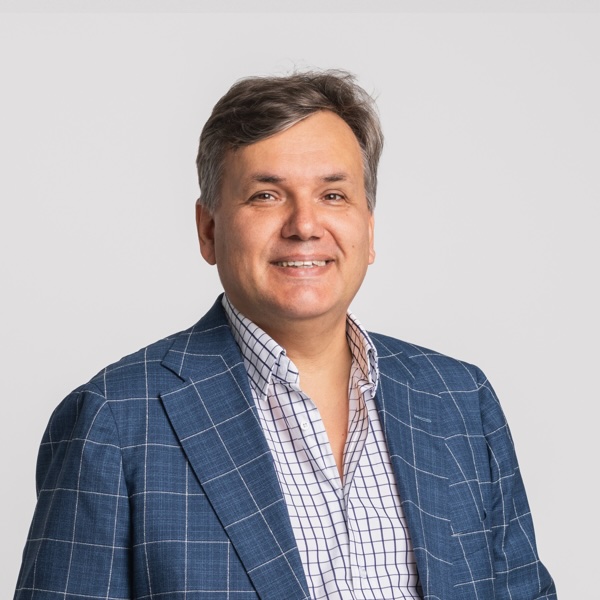
Aliaksandr Pankou
Co-Founder of A.maze.S
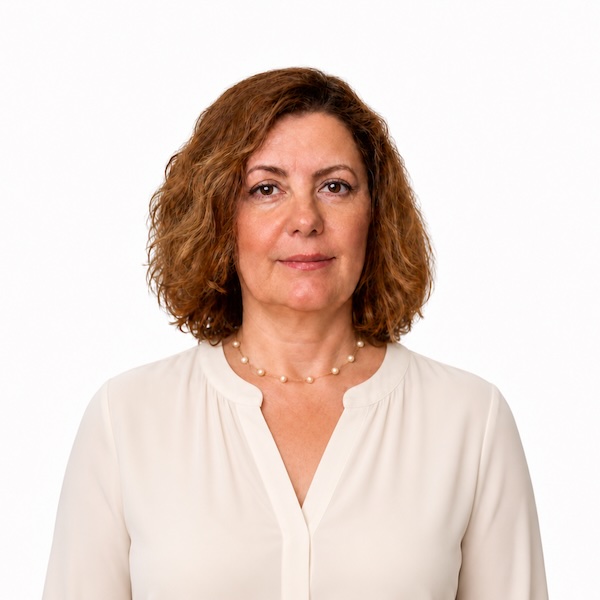
Iryna Sotnikava
Co-Founder of A.maze.S
A detailed description of the current business model. Many participants do this for the first time and discover unexpected things about their own business.
Profiles of key customers with a real understanding of why they choose you.
A map of risks and threats: what in the current model creates risk and what prevents significant growth.
A description of the future business model.
A transformation roadmap: initiatives, action plan, resources, and owners.
Methodology tools you can continue using independently without hiring consultants again.

Tell us about your situation, and we will discuss whether this format fits your needs and agree on the nearest dates.
You May Also Be Interested In
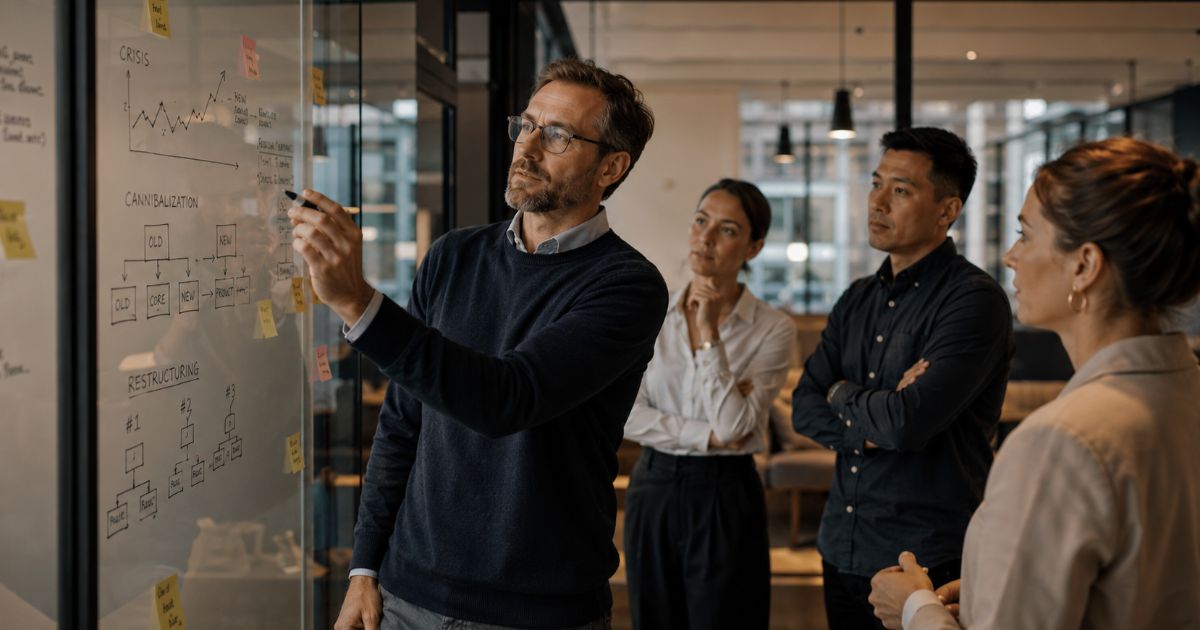
Case Study: How a company navigated three waves of strategic transformation, retained its entire team, and became a product-led business
An inside account of the engagement — from the perspective of the consultants who guided the organization through successive crises, deliberate self-disruption, and three structural rebuilds.
Read more All cases
Review of the strategy development project for ITG Solutions, a Kazakhstan-based integrator
When I came to Alexander, we had one simple but at the same time ambitious request — to understand where to go next, when the goal is not just to survive, but to change.
Read more All testimonials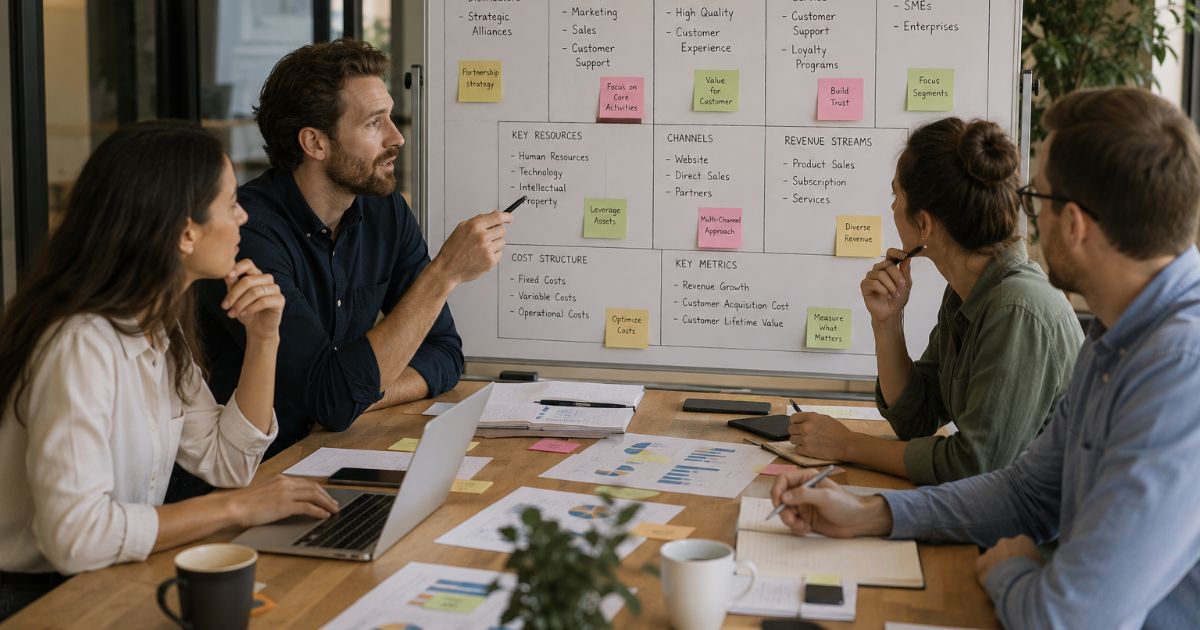
The 8K proprietary methodology for building and evaluating a business model
The 8K method helps you not only understand where your business currently stands, but also identify new growth opportunities by mapping out clear cause-and-effect relationships.
Read more All articles