The Osterwalder Business Model Canvas is an effective strategic management tool that allows you to describe and analyse an organisation’s business model. This approach is useful both for new companies and for established ones.
For startups and early-stage companies, the canvas helps assess the current market position, identify growth prospects, and analyse competitors. Organisations with an established position can use it to uncover weaknesses in their operations and make the necessary changes quickly.
How to build the Osterwalder Business Model Canvas: key stages
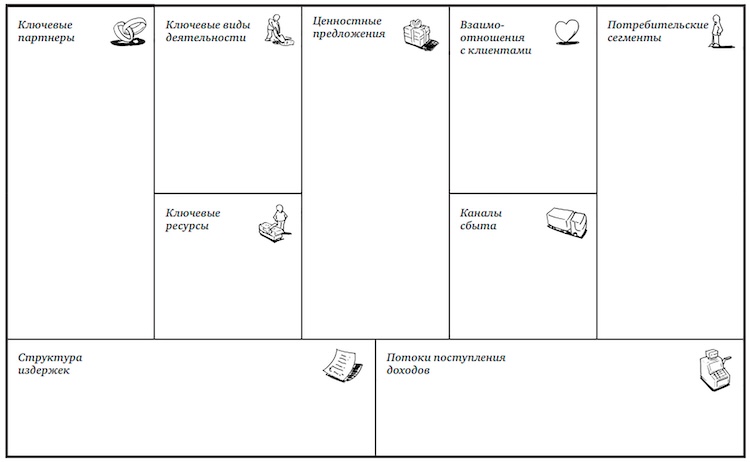
The Osterwalder Business Model Canvas consists of 9 core blocks that help develop the company’s strategy in detail:
- Customer Segments. Defining the target client groups your products or services are aimed at.
- Value Propositions. Articulating the unique advantages that set your company apart from competitors.
- Channels. The routes and methods by which your products or services reach your clients.
- Customer Relationships. Your strategy for engaging with clients, aimed at acquisition and retention.
- Revenue Streams. The company’s main sources of income.
- Key Resources. The critical assets the company needs in order to operate successfully.
- Key Activities. The core processes and tasks that deliver the value propositions.
- Key Partners. External companies or organisations that support your operations.
- Cost Structure. An analysis of the expenses involved in running the business.
Together, these blocks provide a complete picture of the company’s current position and help develop effective solutions for achieving its goals.
Let’s look at the principles for filling in each block of the Osterwalder Canvas
Filling in each of the 9 blocks requires detailed analysis and a strategic approach. Let’s go through the sequence and the core principles for working with each one:
Customer Segments
A customer segment is a group of people or organisations united by shared problems, needs, or characteristics. This block of the canvas describes who the product or service is being created for.
Why does defining customer segments matter?
Precisely defining your target audience is the key to successful advertising campaigns, effective sales strategies, and stronger client loyalty.
How to work with this block?
To describe your customer segments correctly, answer the following questions:
- Who are our clients? Describe who the products, services, or goods are being created for. This could be individuals, companies, or specific groups with particular interests.
- What characteristics does our target audience have? Put together a brief client profile: age, profession, income level, interests, geographic location, and so on.
- Is it easy to reach target clients? Assess how straightforward it is to reach your target audience through advertising, social media, or other channels.
- Which client group matters most to the business? Identify the primary segment that generates the most profit or holds the greatest value for the business.
A thorough analysis of customer segments makes it possible to build a value proposition that is as relevant as possible to the needs of the target audience.
Value Propositions
A value proposition is the core reason clients choose your product or service over a competitor’s. It describes the specific problems you solve and the needs you meet, highlighting what makes your offer unique for a particular customer segment.
Why does the value proposition matter?
It helps clarify exactly what makes your product useful and appealing to clients. A clearly formulated value proposition improves how the brand is perceived, builds trust, and increases conversion.
How to formulate a value proposition?
Answer the following questions::
- What value do we create for clients? Identify the key benefits of your product or service — this could be time saved, cost reduction, convenience, or exclusivity. или услуги. Это могут быть экономия времени, снижение затрат, удобство или эксклюзивность.
- What client problems do we solve? Identify the specific challenges or pain points of your target audience that your product helps to remove.
- What client needs do we satisfy? Ask yourself what your clients actually want, and how your product helps them get there.
- What does our offer consist of? List every element that makes up your offer — services, products, support, and so on.
Channels
Channels are all the routes and methods through which a company interacts with clients at every stage — from informing them about the product through to support after purchase. Well-built channels help create a positive client experience and increase the likelihood of repeat purchases.
The main stages of working with channels:
- Awareness. How do you get information about your product or service in front of your target audience? This could be advertising campaigns, social media posts, email newsletters, trade shows, or partnerships.
- Evaluation. How do clients find out what sets your product apart from competitors? Use your website, reviews, demos, and free trials to highlight your advantages.
- Purchase. How does the buying process actually work? This could be an online store, a physical shop, marketplaces, or personal consultations. Simplicity and ease of process are key here.
- Delivery and onboarding. How is the product delivered or the service provided? Fast delivery, quality packaging, and an easy onboarding experience create a strong first impression.
- After-sales support. What do you do to support clients after the purchase? This could include a support line, warranty service, a loyalty programme, or ongoing communication.
Questions for filling in this block:
- Which channels are most effective for connecting with clients?
- How do we currently interact with clients, and how effective is it?
- Which of the channels we use are most cost-effective?
- How can the client experience be improved at every stage of interaction?
Customer relationships
Customer relationships are the different formats of engagement with your target audience that drive client acquisition, retention, and satisfaction. Well-built relationships strengthen trust, increase loyalty, and grow company revenue.
The main types of interaction:
- Personal assistance. Carried out through direct contact with the client — consultations, technical support, or help at every stage of the deal.
- Self-service. The client can independently get all the information they need or make a purchase through a website, chatbot, or automated system.
- Free or freemium use. Basic services or features are provided free of charge, with the option to purchase additional features. This approach is often used in SaaS models.
- Co-creation. Clients take part in shaping the product or service by providing feedback, ideas, or content — for example, reviews, photos, or videos that the company uses in its marketing.
- Individual or group training. Teaching clients how to use the product or service through seminars, courses, webinars, or training materials.
Engagement formats depending on the business’s objectives:
- Acquisition for a one-off purchase. Suited to businesses with infrequent purchases, where it matters to quickly engage the client, demonstrate the product’s value, and close the deal.
- Retention for long-term engagement. Used by businesses oriented around repeat sales or long-term contracts — loyalty programmes, bonus schemes, or strong after-sales support.
- Specialisation for specific client categories. The relationship is adapted to the unique needs of particular groups — owners of luxury cars, for instance, or clients with a specific set of requirements.
Questions for filling in this block:
- What kind of relationship do clients expect, given your product or service?
- Which engagement model are you currently using?
- Does the current relationship model align with your business strategy?
- Which tools could help improve the client experience?
Revenue streams
Revenue streams describe how your business actually generates profit, and which monetisation models are used for each customer segment. This block helps clarify what’s bringing in most of the revenue, and what additional sources could be tapped to increase profit.
The main revenue models:
- Asset sale. The classic model, where the business earns money by selling physical or digital products to end users, distributors, or dealers.
- Usage fee. Revenue is based on the volume or duration of service use. Example: web development services, where pricing is calculated based on the scope of work or the hours spent on the project.
- Subscription fee. A fixed fee for access to a product or service over a set period. Commonly used in SaaS, streaming services, or gym memberships.
- Lending/renting. Temporary use of an asset in exchange for a set fee. Example: renting equipment, vehicles, or servers.
- Licensing. Revenue from granting the right to use intellectual property — patents, copyrights, software — for a limited period.
- Brokerage fee. The business earns money as an intermediary, taking a percentage of the transaction. Example: marketplaces that charge sellers a commission on every successful transaction.
- Advertising. Generating revenue by placing ads on the company’s platform — banners on a website, for example, or in-app advertising.
Pricing mechanisms:
Each revenue stream has its own pricing model, depending on the value proposition, the competitive landscape, and the characteristics of the target audience. Possible approaches include:
- Fixed pricing (for example, a subscription).
- Dynamic pricing (for example, auction-based pricing).
- Differentiated pricing (depending on purchase volume, loyalty, or client specifics).
- Which products or services are clients willing to pay for?
- What value do they get in return for paying for your product?
- How do they pay now, and how would they prefer to pay?
- Which payment channels are most convenient for your audience?
- How does each revenue stream contribute to the company’s overall profit?
Key Resources
Key resources are the assets needed for the business model to function successfully. They support the creation of the value proposition, the operation of channels, client relationships, and revenue generation.
Why do key resources matter?
These resources provide the foundation for creating products and services, help the business stay competitive, and support long-term growth. Understanding and managing key resources well allows the company to optimise its operations.
What kinds of key resources are there?
- Physical resources: tangible assets such as equipment, raw materials, vehicles, retail outlets, offices, and warehouses.
- Intellectual resources: intangible assets such as brands, patents, copyrights, technology, databases, and software.
- Human resources: a team of specialists with the knowledge and skills needed to carry out the business’s tasks — managers, developers, marketers, and others.
- Financial resources: cash, working capital, credit, investment, and other sources of funding.
How to identify key resources?
Answer the following questions:
- Which resources are needed to create the value proposition?
- Which assets are needed for client relationships and for the channels to function?
- Which resources help sustain competitive advantage?
Key Activities
Key activities are the core operations and processes that create, deliver, and sustain the value proposition. They describe exactly how your business functions and achieves its goals.
Why do key activities matter?
They determine what effort and action are needed to stay competitive, meet client needs, and grow the company. A clear understanding of key activities helps optimise resources and processes.
Types of key activities
- Production: for companies that manufacture goods, this includes procuring raw materials, logistics, production processes, quality control, and delivery.
- Problem solving: relevant for service companies. Includes diagnostics, knowledge management, employee training, research, and analysis of client satisfaction.
- Platform/network management: for platforms, apps, and services — this includes development, testing, technical support, managing the user experience, and planning new features.
How to identify key activities?
Answer the following questions::
- Which actions are needed to create the value proposition?
- Which processes are essential for keeping the company running?
- What is done on an ongoing basis to improve quality and retain clients?
Key Partners
Key partners are the companies and organisations your business works with to keep things running and deliver the value proposition. They provide resources, services, or carry out tasks that you either cannot or do not plan to handle yourself.
Why do key partners matter?
They help reduce costs, minimise risk, optimise processes, and let you focus on your core operations.
How to identify key partners?
Answer the following questions:
- Which partnerships allow us to operate more effectively?
- What resources or services do we get from our partners?
- Which tasks can be handed over to partners without sacrificing quality?
Types of key partnerships:
- Strategic alliances: working with other companies to achieve shared goals — co-branding or joint product development, for example.
- Suppliers: companies that provide the materials, equipment, or services your business needs.
- Outsourcing: handing specific processes — logistics, accounting, or marketing, for example — to outside companies to improve efficiency.
- Platforms or networks: using third-party platforms to extend your reach — marketplaces or advertising networks, for example.
Cost structure
This block captures all the costs involved in creating the value proposition, running the business processes, and engaging with clients. Analysing costs helps optimise the budget and identify which elements require the biggest investment.
How to map out the cost structure?
Answer the following questions:
- What are the main costs involved in producing the product or service?
For example, raw materials, labour, rent. - Which resources cost us the most?
This could be technology, infrastructure, people, or materials. - Which activities require the largest investment?
Identify the processes that demand the most resources — production, marketing, logistics, research.
Types of costs:
- Fixed costs:
Ongoing expenses that don’t depend on output volume.- Office or production facility rent.
- Employee salaries (administrative staff).
- Equipment depreciation.
- Licensing fees.
- Variable costs:
Expenses that change depending on production or sales volume.- Raw materials and supplies.
- Wages for temporary staff.
- Logistics and delivery.
- Commissions paid to partners or platforms.
The Osterwalder Business Model Canvas is a versatile tool that creates a complete picture of how a company operates, by structuring the key aspects of the business on a single page. It covers elements such as value propositions, customer segments, channels, customer relationships, revenue streams, key resources, key activities, partners, and cost structure. The tool is popular thanks to its simplicity and visual clarity: it can be filled in without being a strategic planning expert, and every important aspect of the business is gathered in one place — making it easy to see the full picture quickly and identify weak spots that need attention or optimisation. The canvas works for startups and large corporations alike, helping analyse the current business, develop new strategies, and uncover opportunities for growth.
So now you’ve seen how the Osterwalder Canvas works to structure business processes and build client value.
But how do you know whether the Osterwalder model is right for your company — or whether you should look at Alexander Pankov’s own approach instead?
Sometimes standard frameworks miss the specific nuances of a business, while a more tailored method can reveal new growth opportunities. To choose the right tool, it’s worth looking at different approaches and how they play out in practice.
Want to learn more about how to build a resilient, profitable business model using Pankov’s method? Follow the link and read about the proprietary «8K Matryoshka» methodology.
We’d also recommend finding out more about the «Business Model Stress Test» — a way to improve your business model so it helps your business hit its goals and solve the challenges it’s facing.
You might also be interested in

Case study: Building a transformation strategy for an IT integrator
We wanted a strategy to build on — not to be left behind.
Read more All cases
Review of the strategic session from Jinn, a product-led HRtech startup
What was especially valuable for us was the thorough preparation before the session. The team was worked through, a retrospective was conducted, bottlenecks were identified. This wasn't just "we showed up and talked" — this was real strategizing.
Read more All testimonials