The company has developed a strategy, created a three-year development plan, and defined key initiatives for the year. A strategic session has been held, goals are aligned, and priorities are set.
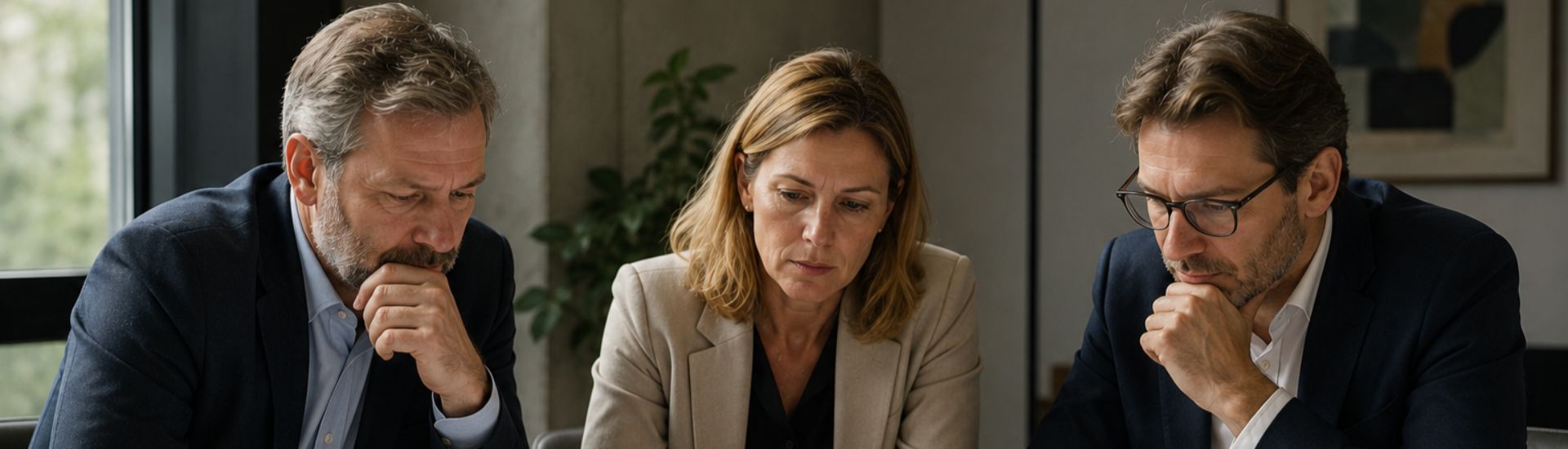
But after a few months, it becomes clear that many initiatives are not moving forward. Leaders are overloaded with operations, deadlines keep shifting, accountability is blurred, and decisions are made more slowly than the business needs.
In most cases, the problem is not the strategy or employee motivation. The reason is that the company’s organizational structure does not support the goals that have been set. It creates hidden constraints that slow down even the right decisions.
What is an organizational structure check-up?
An organizational structure check-up is a comprehensive diagnostic review of the company’s management system.
We assess whether the current structure matches the business’s current tasks and can support strategy execution. We analyze the distribution of functions, responsibility levels, management links, leadership workload, and potential organizational risks.
Why good strategies do not work
Companies invest significant resources in strategy development: they run strategic sessions, involve consultants, and engage the management team. Yet strategy often remains in presentations and exists separately from the company’s daily work.
In most cases, the reason is not the quality of the strategy or a lack of employee motivation. The problem is structural.
When the implementation of key initiatives is concentrated on the owner or a few leaders, they physically cannot combine strategic tasks with operational management. When the company lacks the required functions or roles, strategic projects have no owners. When the motivation system is focused only on operational indicators, employees focus on current tasks rather than business development. When there is no system for monitoring strategic indicators, leadership loses the ability to assess progress objectively and make timely decisions.
As a result, the strategy exists but is not implemented.
An organizational structure check-up helps identify these constraints, assess the company’s readiness to execute the strategy, and define what changes are needed to achieve the goals.

The strategy has been developed and the initiative plan exists, but it is unclear whether the company in its current form can implement it all. You want to be sure before the start, not halfway through.

Implementation is moving slowly and not according to plan. Deadlines shift, explanations differ, and there is no shared picture of why this is happening.

In the strategic plan, most tasks are owned by one or two people. They are overloaded, while everyone else waits.
The company is preparing to enter new markets, launch new products, or scale the business, and the question arises: can the current structure support these plans without overloading key employees or losing manageability?

Departments regularly disagree about areas of responsibility. At the intersections of functions, tasks get delayed, decisions slow down, and some issues remain without an owner or control.

Most management attention and time goes into current issues. Strategic initiatives stay in the plan but do not receive the time, resources, and management support needed for implementation.

Six months or a year have passed since the strategy started, but the business is not showing the changes the team expected. Is the issue really execution, or was the existing organizational structure not designed for these goals from the start?

Departments, roles, and areas of responsibility were created as the business grew and current tasks appeared. How effectively does this system work today, and does it match the company’s current goals?
What we check during the check-up
- Step 1: Top-level structure
- Step 2: Required functions and roles
- Step 3: Role conflicts between departments
- Step 4: Distribution of responsibility and authority
- Step 5: Information flows and measurability (optional)
- Step 6: Reward system (optional)
- Step 7: Report with recommendations
Diagnostics is carried out in three formats, depending on the task and the scale of the company:
Project timelines depend on the company’s scale and the agreed scope of work.
Interviews with key leaders.
We speak with the people directly involved in strategy execution: how they see the situation, where progress is stuck, and what they see as the main blocker. Often this is where issues appear that cannot be seen in any documents.
Document analysis.
We review the existing structure, strategic plan, task and owner distribution, KPI system, and motivation system. We compare what is declared with how it works in practice.
Working groups.
To test individual conclusions and clarify the causes of identified problems, working sessions with the management team may be held. These discussions help compare different perspectives, test working hypotheses, and identify constraints that are not always visible through document analysis, org charts, or one-on-one interviews.
We do not evaluate individual employees. The subject of analysis is the company’s management system: structure, distribution of functions, responsibility, authority, information flows, and interaction mechanisms between departments.
An objective assessment of the strengths and weaknesses of the management system.

A prioritized list of organizational issues that require attention first.

Practical recommendations for developing the organizational structure and management system.
Identification of organizational constraints that slow down business development and initiative execution.

An assessment of the organizational structure’s readiness for growth, scaling, and new development directions.

An understanding of the reasons behind overload in specific leaders and departments.
Identification of areas with unclear responsibility, duplicated functions, and insufficient authority.

An understanding of the causes of conflicts and interaction problems between departments.
Project expert

Iryna Sotnikava
Co-Founder of A.maze.S

Ready to check whether your structure supports strategy execution?

What happens after the check-up
The report is not the endpoint. It is the start of change. After diagnostics, it becomes clear what exactly is getting in the way. What happens next depends on what we find.
If the problem is in the structure, we move to organizational structure redesign: designing a new configuration, responsibility zones, and authority matrices. If the problem is in the motivation system, we develop a reward system focused on strategic results.
We can support the implementation of recommendations at every stage.
If there is no strategy yet, but something inside the company feels off, that is a different request. In that case, organizational diagnostics is the better fit: a broad view of the company without linking the work to a specific strategy.
You May Also Be Interested In

Case Study: How a company navigated three waves of strategic transformation, retained its entire team, and became a product-led business
An inside account of the engagement — from the perspective of the consultants who guided the organization through successive crises, deliberate self-disruption, and three structural rebuilds.
Read more All cases
Review of strategic transformation from Atlant-M automobile distributor
We have been working with Irina using the Adizes methodology for 5 years already, and the very fact that we have never even considered changing our partner speaks to our complete satisfaction with the results.
Read more All testimonials
How to restructure your organisation: a company readiness check-up
The way roles, accountability, and communication are structured determines the speed of decision-making, the quality of processes, and ultimately the competitiveness of the company.
Read more All articles